
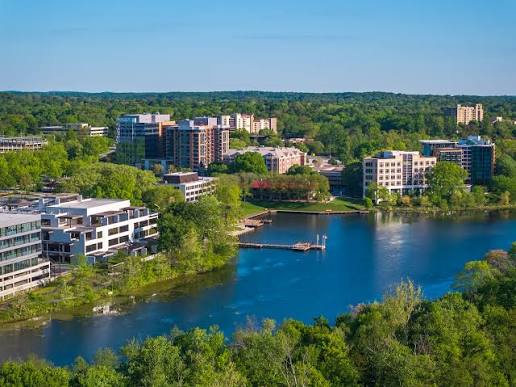
Ellicott City vs. Columbia: Comparing Two Howard County Favorites
When you narrow your home search to Howard County, two names instantly dominate the conversation: Ellicott City and Columbia. They sit side by side along Route 29 and Route 100, feed into the top-rated Howard County Public School System, and offer some of the most convenient commute times in Central Maryland whether you are heading into Baltimore or down toward Washington, D.C.
Because they share the same central location and county resources, many buyers assume Ellicott City homes and Columbia MD real estate are essentially the same market with different zip codes.
When you spend a weekend driving their streets and touring listings, you quickly realize they offer completely different living environments.
Ellicott City delivers a mix of historic charm, winding hills, and expansive suburban subdivisions with traditional single-family layouts. Columbia, on the other hand, is one of the most famous master-planned communities in the United States, built around ten distinct villages, miles of interconnected walking trails, and shared community amenities.
Choosing between them isn't about finding which area is objectively better. It comes down to understanding how your daily routine, budget, and housing preferences match up against the unique mechanics of each submarket. In practice, I see it split pretty cleanly: the walkability and village-center layout pull some buyers firmly toward Columbia, while Ellicott City's larger lots and the pull of Old Ellicott City's historic charm are what make other buyers rule out Columbia entirely. Let's look at how these two Howard County staples compare across property types, real-time prices, local fees, and daily lifestyle.
The Vibe and Layout: Historic Character vs. Master-Planned Design
The visual transition between Ellicott City and Columbia is immediate the second you cross neighborhood lines.
Ellicott City grew organically over two centuries, expanding outward from its iconic Historic Main Street along the Patapsco River. The housing stock here is defined by rolling topography, mature tree canopies, and distinct architectural eras. You will find everything from stone cottages built in the 1800s to mid-century split-levels and grand, brick-front colonial subdivisions built in the 1990s and 2000s. Neighborhoods in Ellicott City feel like traditional, standalone developments, often featuring larger lot sizes and private backyards.
Columbia operates on a completely different structural philosophy. Designed in the 1960s by urban planner James Rouse, Columbia was built from the ground up as a self-contained network of ten villages, including Wilde Lake, Hickory Ridge, Kings Contrivance, and River Hill.
Instead of traditional grid streets or isolated subdivisions, Columbia arranges housing around village centers that house local grocery stores, coffee shops, and community centers. The entire town is connected by over 100 miles of paved pathways that weave through wooded buffers, lakes, and neighborhood parks. If you value step-outside-your-door access to running trails, community pools, and preserved green spaces, Columbia's layout is hard to match anywhere else in the state.
What the Numbers Say: Price Points and Property Types
To understand where your money goes furthest, you have to look at current regional data. According to recent market reports from Bright MLS and Redfin, the overall median sold price across Columbia sits right around $501,000. In contrast, the median sold price for all home types in Ellicott City sits substantially higher, hovering around $699,000.
That baseline price gap exists because the two communities offer vastly different mixes of housing stock.
Columbia features a diverse blend of housing types across almost every price tier. If your target budget sits between $350,000 and $450,000, Columbia offers an abundant selection of two- and three-bedroom condominiums and townhomes in villages like Long Reach, Owen Brown, or Wilde Lake. Moving into the $550,000 to $750,000 range unlocks mid-century detached single-family homes, contemporary designs, and updated split-levels tucked into wooded cul-de-sacs across villages like Harper's Choice or Hickory Ridge.
Ellicott City's inventory is heavily weighted toward detached single-family properties. In highly sought-after zip codes like 21042 and 21043, entry-level detached homes frequently start in the $650,000 to $750,000 range. If you are looking for a four- or five-bedroom executive colonial with a finished basement, a three-car garage, and a half-acre lot, Ellicott City offers extensive inventory, though prices regularly push past $850,000 to well over $1,200,000.
The Financial Fine Print: The Columbia Association Charge
One of the biggest financial differences buyers miss when comparing these two areas is how community fees are calculated.
When you purchase a property located within the designated boundaries of Columbia, you become subject to the Columbia Association (CA) annual charge, often referred to as the CPRA (Columbia Parks and Recreation Association) assessment.
Unlike a standard, flat-rate monthly homeowners association (HOA) fee found in a typical subdivision, the CA annual charge is a property tax-style fee based on the assessed value of your home. The fee is billed annually (or split into monthly payments) and directly funds the maintenance of Columbia's open spaces, lakes, pathway networks, and community infrastructure. For a home assessed at $500,000, this fee adds a noticeable line item to your annual housing expenses that you must factor into your debt-to-income ratio during mortgage underwriting.
In my experience, the CA charge is the detail that gives buyers pause, especially those already paying a condo fee or a separate HOA fee on top of it. That said, it has never once been the thing that kills a deal. If anything, it works the other way: when I find a Columbia-area property that sits outside the CA boundary, that absence becomes a genuine selling point I lean on in the listing.
In Ellicott City, community fee structures are much more traditional. Many older or established single-family neighborhoods have no formal HOA at all, meaning you pay zero monthly or annual community fees. Newer townhouse communities or master-planned subdivisions in Ellicott City do carry standard monthly HOA fees, but they are typically flat fees that cover specific neighborhood maintenance, such as common area landscaping or snow removal, rather than an assessed percentage of your home's total value.
Schools, Commutes, and Daily Routines
Because both Ellicott City and Columbia sit entirely within Howard County, both communities attend the highly ranked Howard County Public School System. School district boundaries cross through both submarkets, meaning high school clusters like River Hill, Centennial, Howard, Mt. Hebron, and Wilde Lake serve neighborhoods across both jurisdictions. If specific school assignments drive your search, you will find top-performing options on both sides of the border.
Commute patterns, however, offer subtle differences. If you work in downtown Baltimore or near Fort Meade, Ellicott City's northern and eastern corridors provide rapid access to Interstate 70, Route 29, and Route 100. This makes trips into the city or over toward Baltimore County exceptionally straightforward. If your daily commute takes you south toward Washington, D.C., Montgomery County, or the NSA campus, Columbia's southern villages, such as Kings Contrivance or River Hill, sit directly along Route 32 and Interstate 95. This cuts valuable minutes off a heavy southern rush-hour commute.
A Step-by-Step Decision Framework for Buyers
Choosing between these two Howard County powerhouses comes down to deciding which physical environment supports your lifestyle and long-term financial goals. Use this practical framework to narrow your focus before you start scheduling tours:
- Evaluate your floor plan and lot size needs: If you require a large, detached four-bedroom colonial with a private, expansive yard and a multi-car garage, focus your search on Ellicott City homes. If you prefer a cozy townhome, a mid-century modern design, or a low-maintenance lot surrounded by shared green space, prioritize Columbia MD real estate.
- Calculate the total carrying cost including fees: Have your lender run side-by-side payment estimates that include the specific Columbia Association assessment charge versus standard HOA fees or non-HOA properties in Ellicott City. Ensure you are comfortable with how that annual charge impacts your long-term monthly budget.
- Map your outdoor recreation style: If your idea of outdoor living involves private backyard entertaining, building a custom patio, or having space for a personal garden, Ellicott City's larger lot sizes deliver. If you want immediate access to miles of shared walking trails, neighborhood lakes, and community pools without maintaining the land yourself, Columbia is hard to beat.
- Test drive your daily commute during peak hours: Spend a weekday morning driving from potential neighborhoods in both Ellicott City and Columbia to your office or frequent destinations. Seeing how Route 29, Route 32, and Interstate 95 perform during actual rush hour traffic will quickly highlight which location offers the smoother drive.
With 14 years of licensed real estate experience in Maryland, I have spent my career helping buyers evaluate neighborhood dynamics, local market data, and property values across Howard, Frederick, Carroll, and Baltimore counties. Both Ellicott City and Columbia represent outstanding long-term investments. The right choice simply depends on matching your budget to the community structure that feels like home.
If you want to review recent closed sales in specific Howard County villages, compare active listings side-by-side, or build a clear strategy to buy your next home this year, send me a message or give me a call today. Let's make sure your next move is a confident one.
Check out this article next