
Home Staging Strategy: High-ROI Seller Preparation for Central Maryland
Last spring, I walked through a colonial-style home in Ellicott City owned by a couple and they were planning a move to downsize and were operating on a strict timeline. He had read several national real estate articles and was convinced they needed to spend $4,500 to hire a professional staging company to bring in a full house of trendy furniture. She was completely against the idea, wanting to keep that cash for their next down payment.
They were stuck in a common seller dilemma: Do we spend thousands of dollars out of pocket to make the house look like an HGTV set, or do we list it exactly as it sits and hope for the best?
We executed a Readiness Audit instead. We didn't lease a single sofa or hang expensive designer draperies. Instead, I helped them by bringing in a seller occupied staging professional, and they spent a grand total of $350 on targeted, high-ROI updates: a gallon of specific off-white paint for a dark hallway, two high-lumen lighting packages for the main living area, and a professional deep cleaning. They launched their property onto the market, captured three competitive offers within the first weekend, and closed well over their target number.
My perspective on property preparation is rooted in 14 years of licensed real estate experience in Maryland, starting with property appraisal and valuation data. I evaluate houses through a strict cost-to-value lens. Staging is not an exercise in interior design; it is a strategic pricing and marketing tool. In the current market, where buyers are highly sensitive to property condition, you do not need to overspend to win. You just need to know exactly which visual elements alter a buyer's psychological perception of value.
Quick Answer
High-ROI home staging focuses exclusively on your property's primary rooms: the entry view, the living room, and the kitchen. National Association of Realtors data confirms that simple tasks like comprehensive decluttering, professional deep cleaning, and maximizing natural light reduce average days on market by up to 40%. These low-cost adjustments achieve identical online visual impact to full furniture rentals at a fraction of the cost.
Key Takeaways
- The Core Rooms Rule: Buyers make up their minds within the first 90 seconds. Focus your time and budget strictly on the entryway, the main living room, and the kitchen counters.
- The Geometry of Space: Removing 30% of your furniture doesn't just make a room look tidy; it physically alters a buyer's perception of square footage, driving higher perceived value.
- Lighting is Leverage: Replacing dated, low-wattage bulbs with modern, 3000K warm-white LED equivalents is the single most cost-effective staging move a seller can make.
- The Online Gatekeeper: 96% of buyers start their search on a screen. If your budget staging strategies do not translate cleanly into professional real estate photography, they will not move the needle.
The 2026 Data: Why Presentation Matters Now
We are navigating a real estate climate where buyers have access to extensive market data. With mortgage rates hovering around historical norms, purchasers are refusing to pay top dollar for properties that feel dark, cramped, or neglected.
Neutral market data from the National Association of Realtors (NAR) profile of home staging outlines a clear directional signal:
83% of buyers' agents state that proper staging makes it significantly easier for a consumer to visualize the property as a future home.
49% of listing agents report that targeted staging measurably reduces a property's total days on market.
29% of sellers' agents report that strategic property presentation yields offers that are 1% to 10% higher than unstaged, raw inventory.
Consider the baseline math. On a $500,000 Central Maryland home, even a conservative 2% price lift translates to an extra $10,000 in retained equity at the closing table. When professional staging companies charge a median price of $1,500 to $4,500 a month for furniture leases, managing the process yourself using your existing assets is the fastest way to maximize your net return.
Step-by-Step: The Budget Staging Blueprint
To move the needle without breaking your budget, you must stop looking at your house as a home and start treating it as a product. Here is the exact step-by-step room audit I implement with my listing clients to maximize structural presentation.
1. The Entryway: The 90-Second Window
The psychological trajectory of a home tour is established before the buyer even steps past the threshold.
The Step: Sweep the front porch, clear away cobwebs from the light fixtures, and wash the front door. Inside the entry closet, remove all but three neutral coats and clear the floor of shoes entirely.
Why It Moves the Needle: If a buyer sees a packed entry closet, their brain instantly registers a lack of functional storage space before they even see the rest of the main level.
2. The Living Room: Maximizing Floor Traffic
The living room is deemed the most critical space by 37% of buyers' agents. The goal here is to highlight layout flow and floor space.
The Step: Execute the "Rule of Subtraction." Remove oversized recliners, extra end tables, and heavy area rugs that cut the room into small visual pieces. Pull your remaining sofa and chairs away from the walls by a few inches to create floating conversation zones.
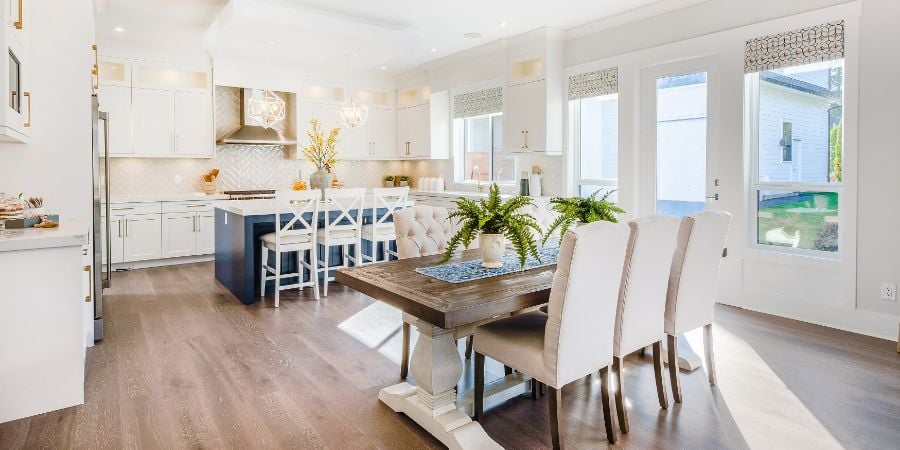
Why It Moves the Needle: Buyers buy square footage. A cramped layout that features oversized recliners and crowded tables will block traffic lines and disrupt sightlines. Shifting to a strategic layout means removing bulky excess items, pulling seating away from the walls, and creating an open floor flow that makes the entire room feel wider in listing photographs.
3. The Kitchen: The Clean Counter Mandate
Kitchen renovations offer high visual impact, but you do not need to replace cabinets to shift a buyer's focus.
The Step: Remove absolutely everything from the kitchen countertops except for one high-end element, like a clean espresso machine or a single bowl of fresh green apples. This includes hiding paper towel holders, trash cans, and small appliances. Meticulously scrub the grout lines and replace yellowed outlet cover plates.
Why It Moves the Needle: Clear countertops signal preparation space. If your kitchen surfaces are cluttered with blenders and spice racks, the buyer's focus is pulled down to daily chores rather than structural utility.
4. The Primary Bedroom: The Neutral Retreat
The primary bedroom must look and feel like a calm, neutral hotel suite.
The Checklist: Pack away all personal family photographs, jewelry organizers, and medical items from nightstands. Invest in a single, crisp white duvet cover or comforter set and two king-sized pillows.
Why It Moves the Needle: Personal items act as a visual roadblock. When a buyer looks at your family vacation photos, they are looking at your life instead of envisioning their own. A neutral white bed instantly brightens the room and elevates the perceived value of the space.
Sellers Who Win vs. Sellers Who Lose
To see how these budget principles operate in the real world, let's look at how two identical listings handle presentation in competitive submarkets.
The Seller Who Loses: The As-Is Stagnation
A homeowner decides to list their four-bedroom split-foyer home exactly as it sits. The walls are painted a dark, personalized tan color from ten years ago. Every room is filled with functional, comfortable family furniture accumulated over a decade. The light fixtures contain a mix of mismatched soft-yellow and bright-white spiral bulbs.
When the professional photographer takes photos, the lens struggles to capture the room boundaries because the furniture blocks the sightlines. The home launches online but looks dark and cluttered compared to nearby new construction. It sits on the market for 45 days without an offer, eventually forcing the seller to execute a steep $15,000 price drop to attract attention.
The Seller Who Wins: Strategic Subtraction
The neighboring homeowner with the exact same floor plan executes a low-cost staging plan. They spend a weekend moving five excess pieces of furniture into a temporary off-site storage unit. They spend $120 to replace all light bulbs with matching 3000K LED warm-white packages. They patch nail holes and apply a fresh coat of bright, neutral paint to the main hallway and living room walls.
When their listing photos hit the market, the rooms look open, uniform, and light-filled. Buyers surfing online platforms instantly add the home to their weekend tour lists. The property captures two clean offers within four days of launch, closing smoothly at full list price with zero repair demands from the buyers.
Is This the Right Move for You?
Your property preparation timeline and strategy depend entirely on your current inventory levels and personal capacity.
Profile 1: The Occupied Move-Up Seller
Your Situation: You are living in your home with children or pets while preparing to list. You cannot easily maintain a pristine gallery look for weeks at a time.
The Priority: High visual return with minimum ongoing operational disruption.
The Decision: Focus your energy strictly on the Pre-Photo Purge. Rent a small mobile storage container for 30 days and pack away 40% of your daily belongings, toys, and off-season clothes ahead of time. Once the professional photography is locked in, your daily maintenance burden drops significantly because the baseline clutter is already out of the house.
Profile 2: The Vacant Asset or Estate Seller
Your Situation: The home is completely empty, exposing every minor wall blemish and floor scratch to visiting buyers.
The Priority: Softening cold spaces and helping buyers understand room scale.
The Decision: Do not spend thousands renting physical furniture for an empty house. Instead, implement a Digital Staging Strategy. Keep the physical house spotless, smelling fresh, and climate-controlled, but use high-fidelity virtual staging for your online marketing photos. This captures online interest at a fraction of the cost, driving physical traffic through the front door.
Frequently Asked Questions
Is home staging worth the cost in 2026?
Yes. When executed strategically, staging is one of the highest-returning investments you can make. It protects your listing against future price reductions by directly lowering your initial days on market.
How can I stage my home for little to no money?
The most effective staging tools cost nothing but sweat equity: comprehensive decluttering, deep cleaning windows inside and out to maximize natural light, removing personal photographs, and shifting existing furniture to create open walking paths.
What rooms should you stage first when selling?
According to historical NAR tracking, you should always prioritize the living room first, followed closely by the primary bedroom, and then the kitchen. Guest bedrooms and home offices hold the lowest priority for buyers.
What is the best paint color for staging a house?
Avoid stark whites or dark greys. The current trend favors warm, light neutrals or soft off-whites that bounce natural light effectively without making the space feel sterile.
Should I clear off my kitchen counters completely?
Yes. Remove all daily appliances, dish soap, and paper towels. Leaving 95% of the counter surface completely bare creates the visual perception of abundant kitchen preparation space.
How do I handle pet odors during the staging process?
Pet odors are an immediate dealbreaker for buyers. Prior to any showings, have all carpets professionally steam cleaned, store pet food bowls out of sight, and utilize air-neutralizing products rather than heavy, artificial scented sprays that hint at hidden damage.
Action Plan: Your 24-Hour Leverage Move
Controlling your home's presentation does not require an interior design degree or a massive line of credit. It requires looking at your space objectively through the eyes of a calculating buyer.
Before you review marketing dates, execute this single strategic move over the weekend:
The Bulb and Brightness Audit: Walk through every room in your house and inspect the light bulbs. Replace any burnt-out lights, and swap out varying mismatched wattages for uniform, 3000K warm-white LED packages. Open every window blind completely and look into each room from the doorway. You will be amazed at how much square footage you can instantly unlock simply by altering the light quality.
If you are trying to prioritize your pre-listing budget and want a clear, realistic appraisal of which updates will net you the highest return in the current market, let's connect.
Check out this article next