
What Buyers Actually Notice First at a Showing in Howard County
You have prepared your home. The floors are clean, the clutter is gone, the photos look great online. The showing is scheduled.
And then a buyer walks in, takes thirty seconds, and forms an opinion that will shape every room they see for the rest of the tour.
That thirty seconds is not random. After 14 years helping sellers prepare homes for market across Howard County — from Columbia village centers to Ellicott City school zones to River Hill colonials — I've watched enough showings to tell you what buyers tend to notice first, why they notice it, and what it costs when sellers don't address it before the photographer arrives.
Howard County is a specific market. Buyers here are often well-prepared and analytical. Many have done substantial research before they walk through your front door — they know what comparable homes have sold for and what condition to expect at your price point. And they are making immediate, largely unconscious judgments in the first moments of a showing that color everything that follows.
Understanding what those judgments tend to be is one of the most practical preparation tools a Howard County seller has.
TL;DR: Howard County buyers tend to notice smell, light, and the kitchen — in roughly that order — within the first sixty seconds of a showing. Everything else is often secondary to those three variables. Sellers who address all three before listing consistently outperform those who don't, regardless of how much they spent on other improvements. The market here is competitive and selective enough that first impressions often shape the entire decision.
The Door Hasn't Even Opened Yet
The first impression in Howard County starts at the curb, and in a market where buyers schedule showings based on listing photos and arrive with high expectations, the exterior has to confirm rather than contradict what they saw online.
Howard County buyers tend to be detail-oriented — many work in technology, federal contracting, healthcare, and professional services, fields that train people to notice inconsistencies. A freshly painted interior combined with a faded front door, overgrown foundation plantings, or a cracked driveway registers as a disconnect. It doesn't disqualify the home, but it plants the first seed of doubt before they've stepped inside.
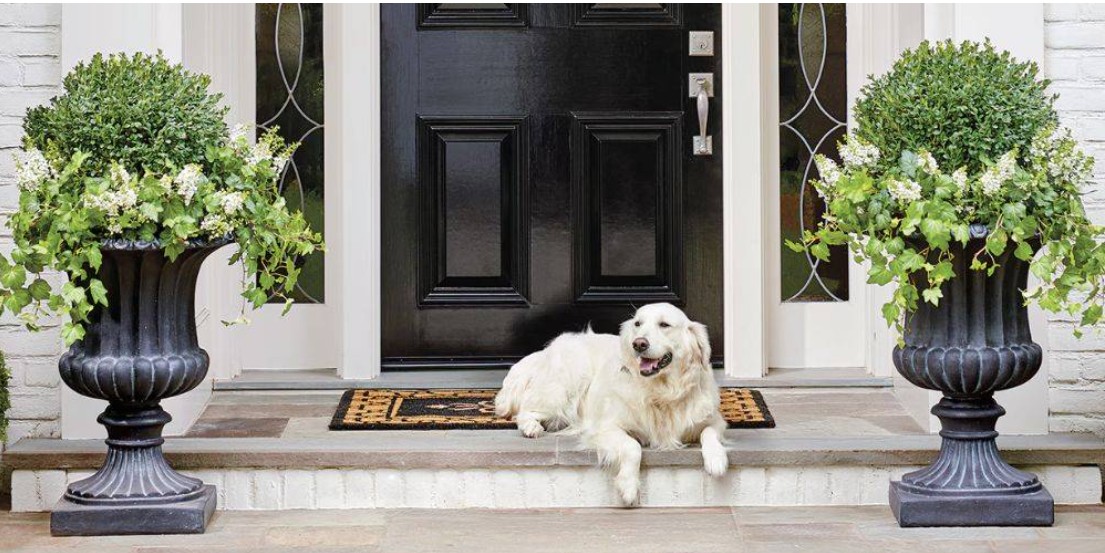
The exterior details that matter most aren't expensive to address. A freshly painted front door — black, navy, and deep green are popular choices in 2026 — clean hardscape, and a maintained lawn are the baseline. House numbers that are current and easy to read. A doormat that isn't worn. One or two potted plants flanking the entry in spring and summer. The cumulative effect is a home that reads as cared for, which is one of the most important signals a buyer is looking for before they open the front door.
The First Thing Buyers Notice Inside: Smell
Smell is one of the most powerful first impressions in any home showing — and the one sellers are least equipped to evaluate objectively.
You acclimate to the smell of your own home. It happens gradually and completely. What registers as normal to you — pet odors, cooking smells, basement must, the particular scent of a home that has been lived in for years — registers as immediate and specific to a buyer walking in for the first time.
In a competitive market where buyers are comparing your home against other well-prepared listings, a smell that triggers hesitation at the door is not easily overcome by a beautiful kitchen or updated bathrooms. The buyer's body language shifts. The tone of the showing changes. They may not even consciously register why.
The solution is generally not air fresheners or candles — both can signal to buyers that something is being masked rather than resolved. The better approach is elimination at the source: washing soft furnishings, replacing HVAC filters, professional cleaning of carpets and upholstery, ozone treatment for persistent pet or smoke odors, and odor-blocking primer on walls that have absorbed cooking smells over years. A home that smells like nothing is the standard. In a competitive Howard County showing, nothing is often the best possible smell.
Light: The Second Judgment Happens Quickly
The moment a buyer steps inside, they tend to register the light level before consciously processing anything else. A bright, open, well-lit home feels larger, cleaner, and more valuable than an identical home with dim lighting and closed window treatments — and Howard County buyers respond to that feeling even when they can't articulate why.
The lighting preparation that makes the most difference isn't complicated. Every burned-out bulb replaced. Every cool blue-white bulb swapped for warm white in the 2700K to 3000K range — warm light photographs better, makes rooms feel larger, and creates the kind of inviting quality that makes buyers slow down rather than move through quickly. Every blind and curtain opened completely before the first showing. Every lamp and overhead light turned on regardless of the time of day.
Fixture replacement deserves specific attention because the housing stock in Columbia, Ellicott City, and the surrounding communities spans several decades of construction. Fixtures that came with a 1990s colonial or a 2005 townhome can read as dated to buyers evaluating the home against newer inventory. Replacing the entryway fixture, the dining room pendant, and the kitchen overhead — three fixtures buyers see first and remember longest — typically runs $150 to $450 total in mid-range fixtures (DIY) and changes the perceived age and quality of an entire home. Add labor cost if you're hiring an electrician.
The Kitchen: Where the Emotional Decision Often Gets Made
Howard County buyers often make their emotional decision about whether they want to live in a home in the kitchen. This tends to be true at $400,000 and at $800,000. The logic they apply afterward — school zone, lot size, commute, condition — often serves as justification for a decision that was made in the kitchen within the first two minutes of the showing.
The kitchen preparation that returns the most isn't renovation. It's the series of specific low-cost changes that address the visual elements buyers respond to emotionally without touching the structural ones.
Every counter cleared to two intentional items. A bowl of fruit, a quality coffee maker, nothing else. Bare counters read as spacious. Covered counters read as insufficient space regardless of how many linear feet exist — and in a market where buyers are comparing your kitchen against newer construction in Howard County's growth corridors, perceived counter space matters.
Cabinet hardware updated if it's dated. A complete set of pulls and knobs for a standard Howard County kitchen runs roughly $60 to $120 in materials and can make 2002 cabinets read as 2022. The psychological impact is disproportionate to the cost because hardware is at eye level and gets touched during every showing.
Lighting addressed. Plug-in or battery-operated under-cabinet LED strips run $50 to $100 and transform a dark kitchen in photographs and in person. (Hardwired under-cabinet lighting costs more if you hire an electrician.) Listing photography matters — buyers often make showing decisions based on photos before they ever contact an agent, and a bright, warm kitchen photograph is one of the strongest tools available to any seller.
Faucet replaced if the current one is builder-grade or showing age. A clean, current faucet itself typically runs $80 to $200; add installation cost if you're not a confident DIY plumber. Buyers tend to notice faucets because they're at eye level and because finish quality registers in a market where comparable inventory is well-prepared.
The Primary Bedroom: The Second Emotional Decision
If the kitchen is often where buyers decide they want the home, the primary bedroom is often where they decide they deserve it.
Howard County buyers at higher price points are frequently trading up from a smaller home or a different community. They have been patient, they have saved, and they arrive at a showing with an emotional readiness to feel rewarded. The primary bedroom either confirms that feeling or deflates it.
Fresh neutral paint in the primary bedroom is one of the most impactful preparation investments after the kitchen. Warm whites with slight yellow undertones and soft warm greiges are performing well in Howard County home sales in 2026. The cool gray accent walls that were popular in Howard County colonials five to seven years ago tend to read as dated now and photograph flat. Warm tones tend to make buyers linger.
Furniture edited to the essentials. Bed, two nightstands, a dresser, and one accent piece if the room has the space. Everything else in storage. A primary bedroom with clear floor space and visible baseboards reads as larger than one packed with furniture regardless of actual square footage — and square footage perception in primary bedrooms is a real variable in how buyers evaluate value.
Quality bedding in white or soft neutral tones. Not expensive — a white duvet cover and matching shams from any mid-range retailer transform a bed from where you sleep to a feature that photographs beautifully. Every surface cleared except one intentional item on each nightstand.
The Bathroom: The Inspection Happens Here
Buyers tend to inspect bathrooms more closely than any other room in the house, and Howard County buyers are often particularly attentive because the price points here carry higher expectations for finish quality and maintenance.
The bathroom details that register fastest are the ones that signal whether a home has been maintained or ignored. Discolored caulk around the tub and shower surround is one of the most damaging visuals in a Howard County bathroom showing — it can read as years of deferred maintenance regardless of everything else in the room. Re-caulking costs about $10 in materials and an afternoon of work. Clean bright white caulk lines signal care in a way that far more expensive updates cannot replicate.
Counter cleared to completely bare. A bathroom counter with nothing on it reads spa. A counter with personal care products, prescription bottles, and accumulated items reads cluttered regardless of the counter's size. Remove everything. One simple neutral accessory, one coordinating hand towel, and a fresh bath mat. The entire refresh costs under $80 and changes the photograph dramatically.
Toilet seat replaced if it shows any wear. $25 to $50 and five minutes. Buyers tend to notice toilet seats, and a worn or stained one communicates neglect in a room where every detail registers.
The Details That Accumulate Into an Impression
Beyond the specific rooms, buyers form a running assessment throughout a showing that is less about individual features and more about the cumulative signal of how the home has been treated.
Doors that stick, light switches that don't work, outlet covers that are yellowed, window locks that don't engage, cabinet doors that hang slightly crooked — none of these is expensive to fix, and each one individually is minor. But a showing where a buyer encounters four or five of these small maintenance signals accumulates into an impression of a home that has been allowed to drift rather than actively maintained. In a market where buyers have options and where inspection negotiations are one of the primary places deals fall apart, that impression has a measurable cost at the offer table.
A pre-listing walk-through that specifically targets these small deferred maintenance items — door hardware tightened, switch plates replaced, sticky doors planed, window locks lubricated — takes an afternoon and typically costs under $200 in materials. The return is a showing experience where nothing interrupts the buyer's emotional engagement with the home.
What Howard County Buyers Often Don't Notice First
Just as important as knowing what buyers tend to notice is knowing what they don't — because a significant amount of pre-listing investment goes toward improvements that move the needle less than sellers expect.
Buyers don't typically notice basement finish quality in the first sixty seconds. They don't notice the age of the HVAC system until the inspection. They don't notice the brand of appliances before they notice the cleanliness of the appliances. They don't notice the specific age of the roof before they notice whether the gutters are clean and the fascia is painted.
And they rarely perceive a full kitchen renovation at the dollar amount it cost the seller. Industry data — including Remodeling Magazine's long-running Cost vs. Value report — has consistently shown that major kitchen remodels typically recover only a portion of their cost at resale, while minor cosmetic kitchen refreshes tend to recover a much higher percentage. A $40,000 kitchen renovation is not generally perceived as $40,000 in added value. The targeted cosmetic refresh is often the better investment for a seller who is preparing to list rather than planning to stay several more years.
The Thirty Seconds That Shape Everything Else
Howard County's market in 2026 rewards sellers who understand what is actually happening during a showing. It is not always a room-by-room evaluation of features and finishes. It is often an emotional experience that begins before the buyer gets out of the car and is largely complete by the time they leave the kitchen.
The sellers who get the strongest offers are not always the ones who spent the most on preparation. They are often the ones who spent on the right things — the smell, the light, the kitchen, the primary bedroom, the bathroom details — and made sure that every variable within those first thirty seconds was working in their favor before the first showing was ever scheduled.
A Listing Readiness Audit is the conversation that makes those decisions specific to your home rather than generic. A room-by-room walk-through that identifies what a Howard County buyer is likely to notice in your specific property — and what they won't — before you spend a dollar or schedule a photographer.
Check out this article next