What Your Credit Score Actually Needs to Be to Buy in Baltimore
A lot of prospective buyers in Central Maryland put their home search on hold waiting for a "perfect" 720 or 750 score before they'll even look at homes in Towson, Perry Hall, or Catonsville. That wait usually isn't necessary. Credit scores aren't a pass or fail test. They're a set of thresholds, and the number you actually need depends on which loan program fits your situation, whether you need Maryland's down payment assistance, and how much you're willing to pay monthly.
Key takeaways:
- There's no single "good enough" score. FHA, conventional, and Maryland's down payment assistance program each have their own cutoff, and the right target depends on which one you actually need.
- 640, not 620 or 580, is the number that surprises most local buyers. It's the general floor for Maryland Mortgage Program down payment assistance, and some specific MMP products require considerably more.
- Your Credit Karma score isn't what your lender sees. Mortgage lenders use older, mortgage-specific FICO models, not the VantageScore consumer apps show you, and the gap between the two can be substantial.
- Lenders use the middle of your three bureau scores, not an average, and with a co-borrower, they use the lower of the two middle scores.
- Paying off an old collection right before applying can backfire. On the FICO models mortgage lenders actually use, it can re-age the account and temporarily lower your score instead of helping it.
Here's what the credit score landscape actually looks like across the main loan programs available in Baltimore County, Howard County, and the surrounding corridors.
The Threshold Breakdown
The 580 threshold: the FHA baseline
If your score sits between 580 and 619, your primary path is typically an FHA loan. The minimum down payment is 3.5%, which on a $350,000 townhouse in Parkville or Dundalk works out to $12,250.
HUD's federal guidelines technically allow FHA approval down to a 500 score with 10% down, but that's the floor set by the program itself, not what you'll experience in practice. Most mortgage lenders apply their own stricter standard, called a lender overlay, and in this market that overlay commonly lands somewhere in the 620 to 640 range even for FHA files, not 580. If your score is closer to 580, it's worth shopping smaller local lenders and credit unions specifically, since they're often more willing to work at the program's actual floor than a large retail bank.
The 620 threshold: where conventional enters the picture
A 620 score is the general benchmark where conventional financing becomes available, with down payments as low as 3% for qualifying first-time buyers through programs like Fannie Mae's HomeReady or Freddie Mac's Home Possible.
Qualifying at 620 doesn't automatically mean conventional is your best option. At that score, your private mortgage insurance rate on a conventional loan runs meaningfully higher than the equivalent FHA mortgage insurance. In this range, FHA often produces a lower total monthly payment even though its down payment requirement is slightly higher.
The 640 threshold: the Maryland Mortgage Program floor
This is the number that catches most local buyers off guard. Maryland runs one of the stronger down payment assistance programs in the country through the Maryland Mortgage Program, offering grants and deferred loans that help cover upfront cash needs. The general minimum credit score to qualify for MMP assistance products is 640, though it's worth knowing this isn't a single uniform number: some specific MMP products, including certain student debt relief loan options, carry considerably higher minimums, in some cases requiring a score closer to 720.
Here's why the 640 line matters so much. A 600 score can still get you an FHA loan on its own, but you generally can't layer Maryland's state grant money on top of it. Getting from 600 to 640 is often the real difference between needing $15,000 or more in cash at closing versus walking to settlement with meaningfully less.
The 680+ threshold: the sweet spot
Once your score crosses 680, conventional financing generally becomes the stronger option. PMI premiums drop, interest rates improve, and automated underwriting tends to move faster and smoother. If you're looking at detached homes in higher price brackets across Lutherville-Timonium, Ellicott City, or Owings Mills, a 680+ score keeps your monthly holding costs meaningfully lower.
Three Credit Mechanics Most Buyers Miss
Beyond the raw thresholds, three specific mechanics consistently catch buyers off guard once they actually pull credit for a mortgage.
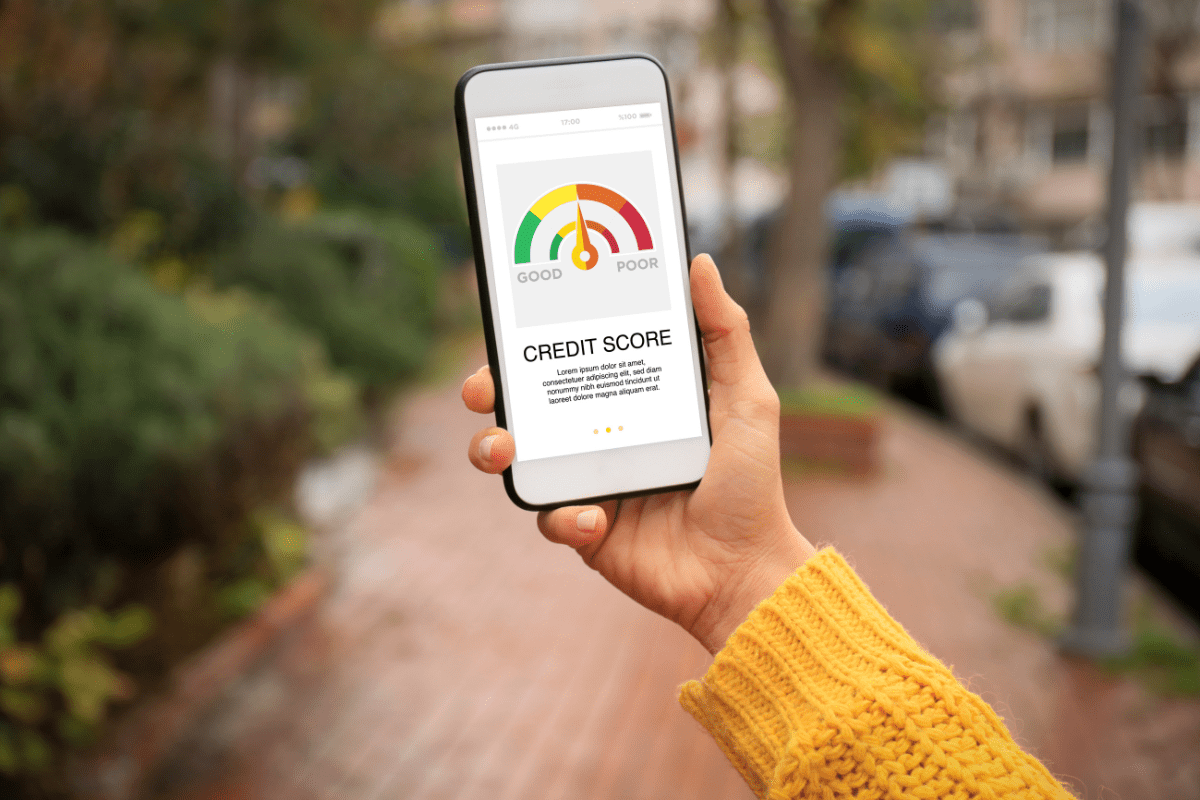
Your Credit Karma score isn't what your lender pulls. The free score on consumer apps is a VantageScore. Mortgage lenders don't use VantageScore. They use specific, older FICO mortgage models, typically FICO 2, 4, and 5, which the industry hasn't fully replaced yet even as newer scoring models roll out elsewhere. It's genuinely common to see a consumer app show 650 while a lender's actual mortgage pull comes back at 615, or the reverse. Don't use a credit monitoring app to judge your mortgage readiness.
Lenders use your middle score, not an average. When a lender pulls credit, they get three numbers, one each from Equifax, Experian, and TransUnion. They don't average them. They use the middle one. If your three scores are 610, 642, and 650, your qualifying score is 642. Applying with a co-borrower changes this further: lenders use the lower of the two borrowers' middle scores. If you have a 740 middle score and your partner has a 610, the loan is underwritten to the 610 tier, not somewhere in between.
Paying off an old collection can backfire right before you apply. When buyers try to clean up credit before buying, the instinct is often to pay off an old medical or collection account sitting dormant for years. That can actually update the account's last-activity date to the current month. On the older FICO models most mortgage lenders still use, paid collections can continue to count against you, and refreshing that activity date can make a stale item look like a brand-new problem, temporarily lowering the exact score your lender will use. Some newer scoring models handle this better, but those aren't the ones pricing most Maryland mortgages right now. If you're carrying old collections, talk to a licensed mortgage professional before paying anything off. In some cases, negotiating a "pay-for-delete" removal is more effective than a straight payoff.
Where Do You Stand Today?
If your middle score is below 580, your priority right now is credit repair, not house hunting. Paying down revolving balances below 30% utilization and disputing any reporting errors is the fastest lever most buyers have.
If your middle score is 580 to 639, you already qualify for FHA financing today. If you have liquid savings to cover the down payment and closing costs without state assistance, you can start shopping now. If you'll need Maryland's down payment assistance, your priority shifts to closing the gap to 640 before you go further.
If your middle score is 640 to 679, you're in a strong window. You have access to the core Maryland Mortgage Program grants alongside competitive FHA and conventional options, and this range is often the most practical buying position for a typical first-time buyer in this market.
If your middle score is 680 or above, you're in the best position for conventional financing specifically, with lower PMI and more aggressive rate pricing. Your focus at this point shifts from qualifying at all to optimizing terms.
Frequently Asked Questions
What credit score do I need to buy a house in Baltimore? It depends on the loan program. FHA is generally available from 580, though many local lenders overlay to 620 or higher in practice. Conventional financing starts around 620. Maryland's down payment assistance generally requires 640, with some specific products requiring more.
Is 620 a good enough credit score to buy a home in Maryland? It's enough to qualify for either FHA or conventional financing, but at exactly 620, FHA often produces a lower monthly payment than conventional once PMI is factored in.
Why does my mortgage credit score differ from my Credit Karma score? Credit Karma shows a VantageScore. Mortgage lenders pull older, mortgage-specific FICO models instead. The two can differ by a meaningful margin in either direction.
What credit score do I need for Maryland's down payment assistance program? Generally 640, though certain specific Maryland Mortgage Program products, including some student debt relief loan options, require a higher score, sometimes around 720.
Should I pay off an old collection account before applying for a mortgage? Not automatically. On the older FICO models most mortgage lenders use, paying an old collection can refresh its activity date and temporarily lower your score. Talk to a mortgage professional first, and consider negotiating removal rather than a straight payoff.
How do lenders decide which credit score to use if I have three different ones? They use the middle score among your Equifax, Experian, and TransUnion scores, not an average. With a co-borrower, they use the lower of the two borrowers' middle scores.
Can I qualify for a mortgage with a credit score below 580? Yes, in some cases. FHA guidelines technically allow scores down to 500 with a 10% down payment, though few Baltimore-area lenders will approve at that level without a strong compensating factor elsewhere in the file.
Match Your Score to the Right Program
The score you actually need isn't about hitting an arbitrary number. It's about matching where you stand today with the loan product built for that tier, whether that's FHA at 580, conventional at 620, Maryland's assistance programs at 640, or the strongest conventional pricing at 680 and up.
Buyers with a 620 score have closed on homes they love in this market. Buyers with a 740 score have gotten stuck because their financing wasn't structured around the right program. The number matters less than knowing which door it actually opens.
If you want to know exactly where your score puts you and which program fits, a first-time buyer consultation is the fastest way to find out. If you're still early in the process, the buyer's checklist is a good place to start mapping out what you'll need.
Check out this article next