
What Maryland Buyers Notice in the First 30 Seconds — And How to Make It Work for You
There is a moment that happens in almost every showing.
A buyer walks through the front door, takes three steps inside, and either their shoulders relax or they tighten up. That moment happens in the first thirty seconds and it determines everything that follows — the offer they make, the contingencies they include, whether they make an offer at all.
Staging is not about making your home look expensive. It's about engineering that shoulder-relax moment for every buyer who walks through the door.
After nearly 20 years working with Maryland sellers across Baltimore City, Baltimore County, Howard, Carroll, and Frederick counties, I've walked through hundreds of homes before and after staging. The difference in buyer response is not subtle. It shows up in days on market, in offer price, and in how aggressively buyers negotiate once they're under contract.
TL;DR: The highest-return staging investments for Maryland sellers in 2026 are deep cleaning, strategic decluttering, fresh neutral paint, lighting updates, and intentional furniture editing. Most of these cost under $3,000 combined. The return is consistently four to six times the investment in faster days on market and stronger offers.
Why This Matters More in 2026
Maryland buyers today are doing more research before they ever schedule a showing than buyers did five years ago. They've seen the listing photos, driven by the property, looked up school ratings, and read the neighborhood reviews. By the time they walk through your front door they've already formed an opinion.
Staging is what confirms or contradicts that opinion in the first sixty seconds.
With active inventory up 12.2% year over year and buyers having more choices than they've had in years, the homes that feel move-in ready from the moment the door opens are generating competitive offers. The ones that feel cluttered, dated, or unfinished are getting lowball offers and aggressive inspection negotiations. The gap between those two outcomes is real — and most of it comes down to preparation.
Start Here Before You Spend a Dollar
Open your phone camera and walk through every room of your home. Look at the screen rather than the room itself. What you see through the camera is exactly what buyers will see in your listing photos — and what they'll compare against their mental image when they arrive for a showing.
Notice what catches your eye negatively. The cord trailing across the baseboard. The crowded bookshelf. The bathroom counter covered with personal care products. The kitchen buried under appliances and mail. Write down everything that registers as visual noise. That list is your staging priority guide and it costs nothing to create.
The camera doesn't lie and it doesn't acclimate the way your eye does after years of living in a space. Trust what it shows you.
The Kitchen
The kitchen closes deals in Maryland. At every price point from Baltimore City rowhomes to Howard County single-family homes, buyers make their emotional decision in the kitchen and justify it with logic afterward.
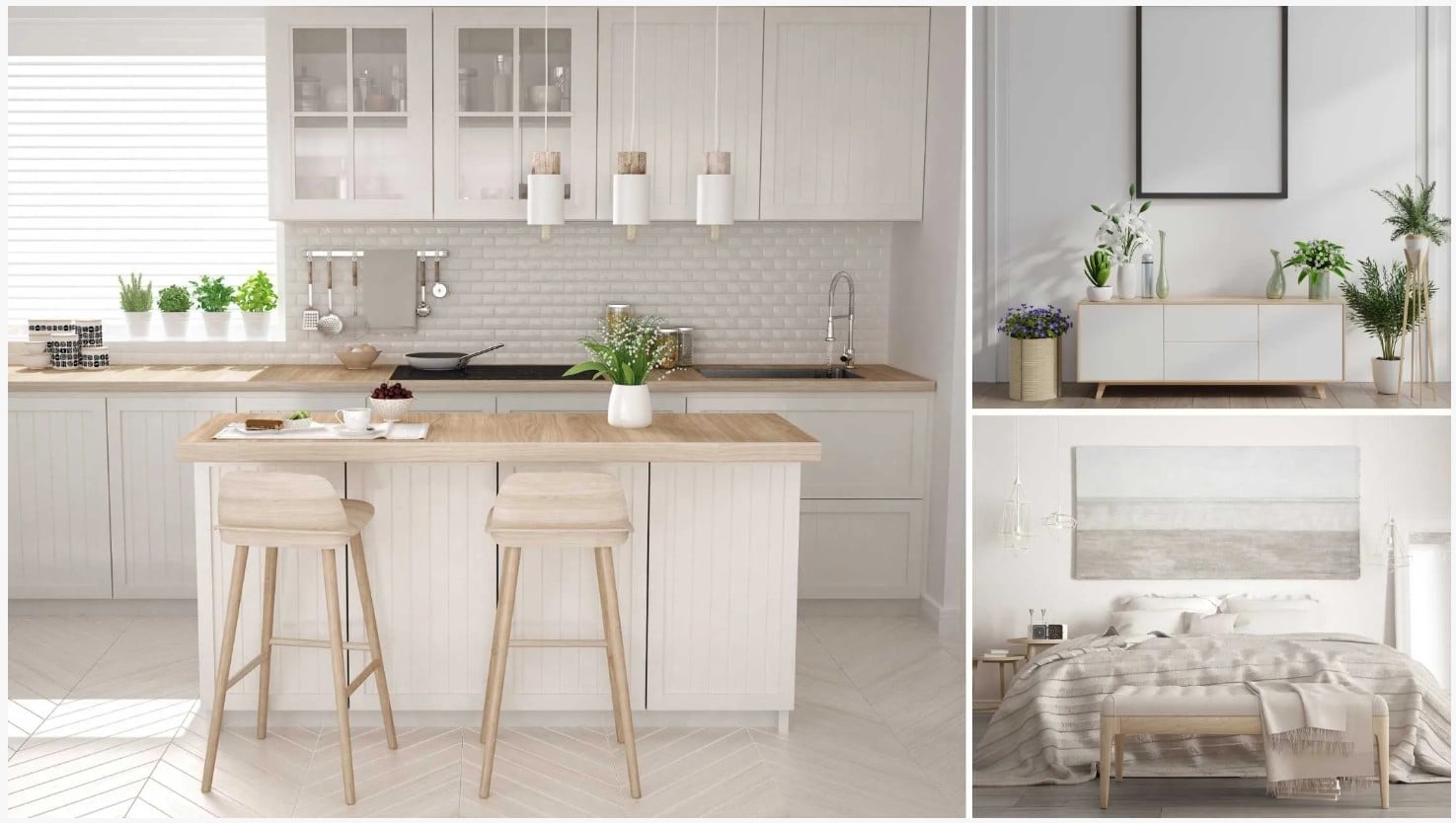
Clear every counter completely except for one or two intentional items — a bowl of fresh lemons, a clean coffee maker, nothing else. Bare counters read as spacious. Covered counters read as small. Update cabinet hardware if it's dated; a full set of pulls for a standard Maryland kitchen runs $60 to $120 and can make 1995 cabinets read as 2022. Replace a builder-grade faucet if the current one is showing age — buyers notice faucets more than sellers expect because they're at eye level and get touched during every showing. Address the lighting, clean every appliance until it looks new, and open the microwave, the stovetop, and the refrigerator handles before every showing because buyers open things and they remember what they find.
One thing worth saying clearly: do not renovate the kitchen before selling. A full kitchen renovation returns less than 70 cents on the dollar in most Maryland markets. Cosmetic updates return far more than structural ones.
The Primary Bedroom
The primary bedroom is where Maryland buyers project themselves most directly. They're not evaluating a room — they're imagining waking up in it.
Fresh neutral paint is the single most impactful change you can make here. In 2026, warm whites with slight yellow undertones and soft warm greiges are performing best in Maryland home sales. Cool grays have peaked. Edit the furniture down to the essentials — bed, two nightstands, a dresser, and one accent piece if the room has space for it. Everything else goes into storage. A bedroom with clear floor space and visible baseboards reads as larger than one packed with furniture regardless of actual square footage.
Invest in quality bedding in white or soft neutral tones. You don't need to spend a lot — a white duvet cover and matching shams from any mid-range retailer transforms a bed from a place you sleep to a feature that photographs beautifully. Remove everything from the top of the dresser and nightstands except one intentional item each. And avoid bold accent walls — a dark or bright wall color in the primary bedroom polarizes buyers and photographs poorly in most lighting conditions.
The Living Room
The living room is where buyers calculate how their life would fit into your home. The staging goal is to show that life clearly without asking them to imagine around the clutter.
Remove at least 30% of the furniture currently in the room — most Maryland living rooms have accumulated too many pieces over years of living. Define a clear conversation area with what you keep, floating furniture slightly away from walls to create a more intentional feel. Add texture through throw blankets and pillows in two or three coordinating neutral tones; $30 to $60 at Target or HomeGoods updates furniture that is otherwise perfectly fine for showing.
Maximize light in every way available. Open every blind and curtain completely. Add a floor lamp to any corner that reads dark. Turn on every light before every showing regardless of the time of day. And if you have a fireplace, clean the firebox and paint the surround if it's dated — a clean, simple fireplace is a genuine selling point in Maryland winters and a visual anchor that draws buyers into the room.
The Bathrooms
Bathrooms get inspected more closely than any other room in a Maryland home. A bathroom that reads spa is a bathroom that closes deals.
Remove absolutely everything from the counter — every personal care product, every toothbrush, every piece of jewelry. Nothing. A completely clear bathroom counter is one of the most powerful staging moves available and it costs nothing. Replace the toilet seat if it shows any wear ($25 to $50 and five minutes of work). Swap in a white or neutral shower curtain and liner. Re-caulk the tub and shower surround if existing caulk is discolored — caulk costs $6 and an afternoon, and clean bright white caulk lines are one of the fastest signals to buyers that a home has been maintained. Add a fresh white bath mat, matching white hand towels, and one simple neutral accessory and the bathroom photographs like a hotel.
Don't try to compensate for bathroom condition with excessive decorating. Candles and accessories cannot hide grout that needs cleaning or caulk that has failed. Clean and minimal always beats decorated and imperfect.
The Entryway
The entryway sets the emotional tone for every room that follows. It's the first interior impression and it takes less than three seconds to form.
Clear everything that doesn't belong — shoes, bags, coats, mail, dog leashes, anything accumulated near the door. Add a simple mirror if there isn't one already; mirrors make small entryways feel larger and add light in spaces that are often dim. A fresh doormat and one simple furniture piece creates an intentional, welcoming moment without overcrowding the space. Make sure the light fixture works and uses a warm bulb — a burned-out bulb or cold blue-white light in the entryway reads as neglected immediately.
Curb Appeal
Buyers form their opinion of your home before they get out of the car.
Mow and edge the lawn. Power wash the driveway, front walk, and any hardscape — these two steps alone transform the street presence of most Maryland homes. Paint the front door if it's faded or dated; black, navy, and deep green are performing strongly as front door colors in Maryland right now. Replace dated house numbers ($15 to $40 at any hardware store). Add one or two potted plants with seasonal color flanking the entry and a fresh doormat and the whole exterior presentation comes together for well under $150.
Don't over-landscape before listing. Extensive new plantings are not cost-effective and buyers will negotiate around them regardless. Clean, maintained, and welcoming is the goal.
The Lighting Checklist
Lighting is the cheapest and most dramatically transformative staging element available — and the most consistently overlooked. Here's the complete checklist before any showing or photography session.
Replace every burned-out bulb in the house — a burned-out bulb reads as deferred maintenance. Replace every cool blue-white bulb with warm white in the 2700K to 3000K range. Replace one dated fixture per room if budget allows, prioritizing the dining room pendant, kitchen fixture, and entryway light. Add floor lamps to dark corners in living spaces. Open every blind and curtain completely. Turn on every light in the house before buyers arrive — every room, every lamp, every under-cabinet light. A fully lit home feels larger, warmer, and more welcoming than one where buyers are walking into dim rooms.
What Not to Spend On
A full kitchen or bathroom renovation before listing returns less than 70 cents on the dollar in most Maryland markets. Before assuming carpet needs replacement, get a professional cleaning quote — whole-house cleaning runs $150 to $300 and often restores what sellers assumed was gone. Avoid trendy or highly personalized decor; your staging should not have a point of view, it should create space for the buyer's. And don't try to stage a vacant room with one piece of furniture and three accessories — it doesn't feel curated, it feels sparse. Either furnish it properly or leave it empty and use virtual staging in the listing photos.
The Full Budget Picture
For a 1,500 to 2,000 square foot Maryland home in average condition:
| Item | Estimated Cost |
|---|---|
| Professional deep clean | $250–$400 |
| Storage unit (one month) | $100–$150 |
| Fresh paint (main living areas) | $400–$800 |
| Lighting updates | $150–$300 |
| Kitchen refresh | $150–$400 |
| Bathroom refresh | $75–$200 |
| Bedroom refresh | $75–$200 |
| Curb appeal | $100–$200 |
| Accessories and miscellaneous | $100–$200 |
| Professional photography | $200–$300 |
| Total | $1,600–$3,150 |
On a $400,000 Maryland home, that's less than 0.8% of your sale price — with a return that consistently outperforms the cost by a factor of four to six.
Questions I Hear a Lot
Do I need a professional stager? For most Maryland homes priced under $600,000, a focused DIY approach delivers strong results. Professional stagers add the most value in vacant luxury properties, homes with unusual floor plans, or listings where the seller doesn't have time to manage the process themselves.
How far in advance should I start? Four to six weeks before your target list date. This gives you time to declutter, complete painting and updates without rushing, allow paint to cure fully, and photograph the home after everything is in place. Rushing the staging process is one of the most common and most expensive mistakes Maryland sellers make.
What if my home is occupied while listed? Most Maryland homes sell occupied and that's perfectly manageable. Establish a consistent 15-minute showing reset routine — surfaces cleared, beds made, lights on, blinds open, fresh air circulated. Consistency in maintaining the staged condition between showings matters as much as the initial preparation.
Should I stage if my home is already updated? Yes. An updated home that isn't staged consistently loses to a less updated home that is. The question isn't whether your home is nice — it's whether it feels move-in ready to a buyer who has never been inside before.
Does virtual staging work? Very well for vacant rooms in listing photos. It costs $50 to $100 per room and transforms an empty space into something buyers can respond to emotionally online. Just make sure the listing is clear about which rooms are virtually staged so buyers arrive with the right expectations.
What's the single most important staging investment? The deep clean, every time. A spotless home with minimal furniture and no odor consistently outperforms an elaborately decorated home that doesn't feel clean. Clean is the foundation everything else builds on.
Before the Photographer Shows Up
Every decision a buyer makes at the offer table is influenced by how your home made them feel during the showing. A home that felt clean, open, bright, and move-in ready gets stronger offers, fewer contingencies, and less aggressive post-inspection negotiation. A home that felt cluttered, dark, or unfinished gets offers that reflect the buyer's uncertainty about what it will cost them to make it feel right.
Staging isn't about hiding what your home is. It's about revealing what your home can be — clearly, immediately, and without asking buyers to use their imagination.
My role is to walk through your specific home and tell you exactly what it needs before the photographer shows up and before the first buyer walks through the door.
Ready to find out? Request a complimentary Listing Readiness Audit and I'll walk through your property room by room before we ever talk about a list price.
Check out this article next