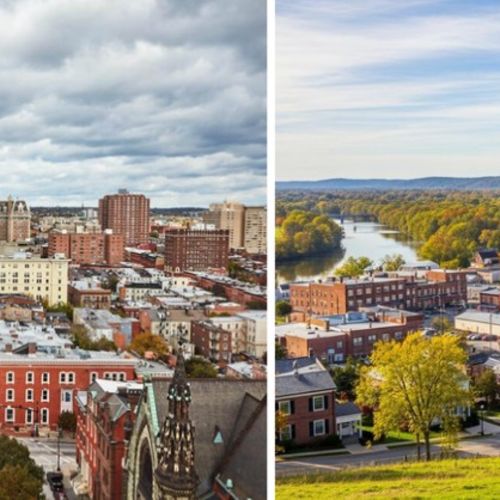

The Investor’s Edge: How to Spot Undervalued Property in the Maryland Market
In the Maryland real estate landscape, "undervalued" does not mean "cheap."
In high-demand corridors like Howard County or the hot blocks of some Baltimore neighborhoods, a low price tag can often signal a liability rather than an opportunity. To the seasoned investor, finding value is about identifying a discrepancy between a property’s current presentation and its future potential.
Whether you are scouting for a fix-and-flip in Frederick or a long-term rental in Anne Arundel, here is how to see the opportunities others miss.
1. Identify "Functional Obsolescence"
Many properties sit on the Maryland market because they no longer "work" for the modern lifestyle. In older Maryland builds, from 1950s ramblers to historic rowhomes, the layout is often the biggest barrier to value.
The Opportunity: A 3-bedroom home with a "chopped up" floor plan or a massive, unfinished basement in a neighborhood where finished square footage commands a premium.
The Strategic Move: Look for non-load-bearing walls that can be removed to create the open-concept kitchen/living area today’s buyers and renters demand.
The Value Play: Adding a legal bedroom or a second bathroom in a basement can shift a property from one price bracket to the next, often for a fraction of the cost of a full addition.
2. Decode the "Lazy" Listing
In a digital-first market, a property is only as good as its photos. Some of the best undervalued deals in Maryland are simply victims of poor marketing.
What to Watch For: Listings with dark, amateur smartphone photos, minimal descriptions, or those that have crossed the 45-day mark on the market.
The Professional Insight: In a state where the median days on market is often under 20, a "stale" listing creates leverage. These sellers are often frustrated and more inclined to accept structured offers or provide seller concessions that a "hot" listing wouldn't allow.
3. Track the "Spillover" Effect
Value in Maryland often travels along transit and employment lines. If a "Primary" neighborhood (like Bethesda or Columbia) becomes cost-prohibitive, the "Secondary" neighborhood immediately adjacent is where the next wave of appreciation lives.
The Indicators: Look for "Path of Progress" signals: a new Purple Line stop, a major biotech expansion in the I-270 corridor, or a new grocery-anchored development in a previously underserved area.
The Strategy: Invest in the "Goldilocks zone", areas that offer a 15–20 minute commute to major employment hubs but sit at a 20% lower entry price point than the hub itself.
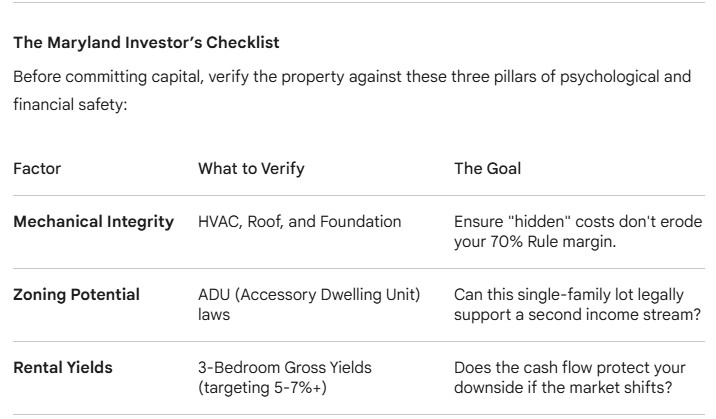

The Professional Perspective
Successful investing in Maryland isn't about timing the market; it’s about clarity of decision. Market noise will always exist, headlines will amplify fear or hype. Your job is to translate that noise into meaning.
When you find a property that is structurally sound but aesthetically or strategically "broken," you aren't just buying real estate. You are buying a problem you have the skills to solve. That is where true equity is built.
Are you evaluating a specific Maryland zip code and want a second set of eyes on the comparable sales? Reach out today, and let’s look at the data together.
The Maryland market moves fast, but the smartest decisions are made with patience and context. I send out a monthly brief that translates market noise into actionable signals for local investors. No spam, no urgency, just the data you need to stay well-prepared.
Check out this article next