What Online Calculators Get Wrong About Buying a Home in Carroll County
Most affordability calculators are lying to you — not maliciously, but by omission.
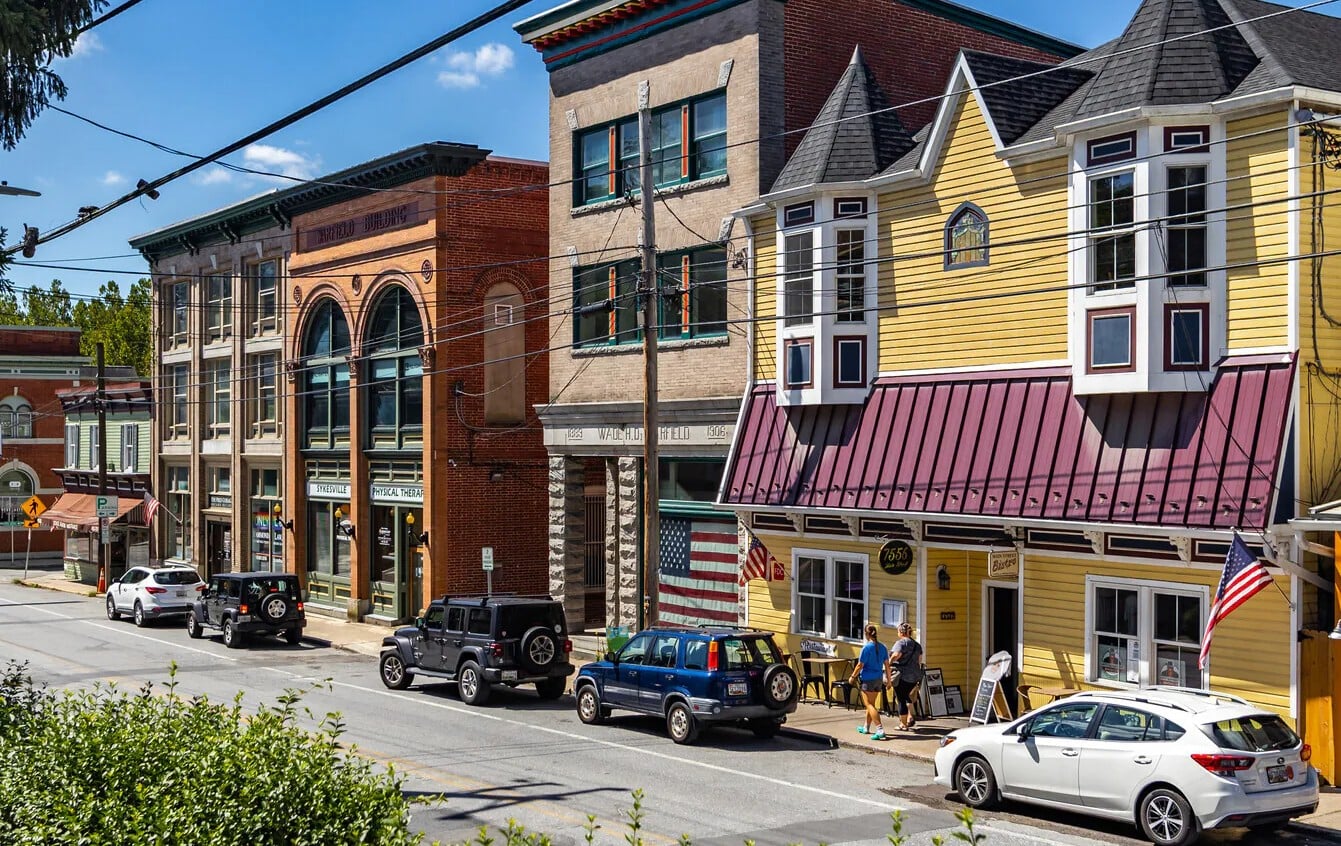
A couple I sat down with recently had spent hours running their numbers through every major online mortgage tool before our consultation. Based on their combined $135,000 income, the calculators cheerfully told them they could afford a $520,000 purchase, with a monthly payment around $2,700. They had already identified a four-bedroom split-foyer in Sykesville and were ready to write an offer.
When we ran the real math — layering in Carroll County's property tax rate, Sykesville's municipal town assessment, localized homeowner's insurance premiums, and standard escrow setups — their estimated monthly payment crossed $3,850. They had no idea. The online tools had built their budget on statewide averages and national approximations, with no awareness that their specific target location carried a two-tier tax structure.
Contrast them with a project manager I worked with who was commuting toward the Baltimore corridor. Instead of shopping at the ceiling of her pre-approval, she mapped out her true debt-to-income framework, identified which Carroll County pockets carry municipal tax add-ons and which don't, and targeted an unincorporated area of Hampstead. She secured a clean detached home within her safe financial boundaries, locked in her loan, and closed without the payment shock that derails so many buyers at the finish line.
Nearly two decades of Central Maryland transactions — beginning with property appraisal, valuation analytics, and Broker Price Opinions — has built one consistent conviction: in a market where 30-year fixed rates are holding near 6.5% and Carroll County's median sold price has moved into the $460,000–$490,000 range, a generic internet calculator isn't just inadequate. It's a direct financial risk.
Quick Answer
Finding your true purchasing power in Carroll County means aligning your total monthly housing costs with a strict Debt-to-Income (DTI) ratio — the threshold top lenders use, which caps at 43% to 45% of gross income for conventional financing. The essential step most calculators skip is manually accounting for Carroll County's baseline property tax rate of $1.018 per $100 of assessed value, the Maryland state rate of $0.112, and the municipal tax add-on that applies if you buy inside the incorporated boundaries of Westminster, Sykesville, Taneytown, Hampstead, or Manchester. That geographic distinction can shift your monthly payment by $100 to $200 before you change a single thing about the house.
Key Takeaways
- The DTI framework is the real ceiling — Lenders evaluate your application through two ratios: a front-end housing ratio (ideally 28–31%) and a back-end total debt ratio (capped at 43–45%). Your income isn't the only variable — your existing debt load matters just as much.
- Carroll County runs a two-tier tax structure — The county base rate of $1.018 is highly competitive for Maryland. But buyers inside incorporated town lines face an additional municipal levy that stacks directly on top, and that extra cost is permanent.
- Town boundary location is a budget decision — Buying outside town lines protects your monthly cash flow from the secondary tax layer. On equivalent properties at the same price, the monthly difference can exceed $150.
- Inventory is tight — With active county listings running well under two months of supply, preserving a liquidity buffer for fast-moving bidding situations is essential. Buyers who stretch to their absolute qualification ceiling leave themselves no room to maneuver.
The Math Behind the Mortgage Approval
When an underwriter reviews your loan file, two ratios determine your approval and your terms.
The Front-End Ratio (The Housing Cap)
Your front-end ratio is your total projected housing payment — principal, interest, taxes, and insurance, together called PITI — divided by your gross monthly income. Most conventional lenders want this ratio below 28% to 31%. On a combined household income of $10,000 per month, that puts your maximum housing payment target around $3,100 before factoring in debt.
The Back-End Ratio (The Total Debt Cap)
The back-end ratio combines your PITI with every recurring monthly liability on your credit report: car loans, student loan minimums, credit card minimums. For standard conventional financing, underwriters want this total below 43% to 45%. If you carry a $500 car payment and $300 in student loan minimums on a $10,000-per-month income, you've already consumed 8% of your back-end allowance before a single dollar of housing costs is counted.
The Carroll County Variables That National Calculators Ignore
The Two-Tier Property Tax Structure
Carroll County's baseline real property tax rate for FY2025–2026 is $1.018 per $100 of assessed value. The Maryland state tax adds $0.112 per $100. For buyers outside any incorporated town, that combined rate of $1.130 is the full picture.
The variable that breaks most budget projections is the municipal levy. If you purchase inside specific town lines, an additional rate stacks on top. Westminster carries the county's largest municipal rate at $0.560 per $100, bringing the combined total to $1.690. Sykesville adds $0.320, for a combined rate of $1.450. Taneytown adds $0.370, for a combined rate of $1.500. Hampstead adds $0.220, for a combined rate of $1.350.
To put those differences in dollar terms on a $420,000 purchase: in unincorporated Carroll County (Finksburg, outer Hampstead), the combined county and state rate of $1.130 produces approximately $4,746 per year in property taxes, or roughly $396 per month in escrow. The same property inside Westminster's town limits, at $1.690, produces approximately $7,098 per year — about $591 per month. That $195 monthly difference applies to every month you own the home, independent of what interest rates do.
Front Foot Benefit Assessments
In newer subdivisions across Mount Airy and parts of Westminster, developers pass along deferred infrastructure costs through private front foot benefit charges. These sit entirely outside the standard property tax line, and they don't show up in a generic online calculator. A title search or SDAT parcel review will surface them.
HOA Assessments
Older rural sectors of Carroll County have limited association oversight, but master-planned communities carry mandatory fees that underwriters count directly against your front-end ratio. Carroll County neighborhood HOA fees commonly range from $40 to over $100 per month and must be factored into every payment projection.
Two Buyers, Identical Income, Opposite Outcomes
The Buyer Who Lost: The Online Affordability Illusion
A family earning $9,500 per month ($114,000 annually) uses a browser-based mortgage calculator. With 5% down and a 6.5% fixed rate, the tool approves a $450,000 purchase inside Westminster's town limits. They go under contract.
When the real numbers come through — Westminster's combined county, state, and municipal tax rate of $1.690, required private mortgage insurance at that down payment, and a neighborhood HOA — their true monthly PITI settles at $3,450. With a $500 car payment and $300 in student loan minimums, their back-end DTI lands at 44.7%. They close, technically qualifying for the loan, but enter homeownership entirely house-poor. There's no monthly buffer for seasonal costs, maintenance reserves, or any financial disruption.
The Buyer Who Won: The Pre-Tour Budget Audit
An identical family earning the same $9,500 per month runs a different process. Recognizing that Westminster's municipal tax rate is the highest in the county, they redirect their search to unincorporated pockets of Hampstead and Manchester, where the county-and-state combined rate of $1.130 applies. They target a home at $390,000. Their monthly PITI comes in at $2,650. Their back-end DTI settles at a highly defensive 36.3%. They close with an open cash-flow buffer — room to fund retirement contributions, absorb seasonal energy costs, and handle maintenance without financial stress.
The house was less expensive, yes. But the geography mattered just as much as the price.
Decision Framework: Mapping Your Affordability Path
Your Situation: You are a first-time buyer utilizing savings or a down payment assistance program through the Maryland Mortgage Program. You want to establish a stable home base in Carroll County while protecting your monthly cash flow and savings rate.
Your Priority: Preserving a monthly financial buffer and avoiding any threat of operational insolvency in year one.
Your Decision: Target a 35% back-end DTI ceiling. Focus on unincorporated county tracts — Finksburg, outer Manchester, areas outside the Westminster, Sykesville, and Hampstead town boundaries — to avoid secondary municipal tax layers entirely. Townhome options and starter single-family layouts in those corridors offer the strongest cost-of-ownership math for buyers working at the program income limits. Avoid neighborhoods with heavy HOA assessments until your cash reserves justify that additional fixed cost.
Your Situation: You are a move-up buyer — either relocating to Carroll County along the regional highway commuter corridors, or liquidating equity from a starter home to fund a larger purchase.
Your Priority: Locking in premium long-term asset value, typically in a top-performing school cluster, with sufficient room to carry the mortgage without straining your financial structure.
Your Decision: Scale the housing front-end up to 30%, but retire consumer debt first. With non-housing debt cleared, the $500,000 to $700,000+ tier in Finksburg, Marriottsville, or premier corners of Sykesville becomes financially comfortable rather than a stretch. A strong down payment that eliminates PMI sharpens the monthly math considerably. Bring a verified local pre-approval letter to every offer — in a county where inventory regularly moves in 30–35 days, a clean approval document is a practical competitive tool.
Frequently Asked Questions
How much income do you need to buy a home in Carroll County?
To purchase near the current county median, with a 5% down payment at today's rate environment, most conventional approvals require a documented gross household income between $100,000 and $120,000 — depending on existing debt load and which municipality the property sits in. Town-specific tax rates can move that income threshold several thousand dollars in either direction.
What is the maximum debt-to-income ratio for a mortgage in Maryland?
For standard conventional financing, the back-end cap sits between 43% and 45%. FHA automated underwriting can accommodate higher ratios in specific circumstances for qualified borrowers, but that comes with stricter mortgage insurance requirements and a higher total cost of borrowing.
Are property taxes high in Carroll County?
Relative to neighboring jurisdictions, Carroll County's base rate of $1.018 per $100 is highly accessible — one of the more competitive rates in the region. The important variable is whether the target property sits inside a town's incorporated limits, which appends a municipal levy on top of the county and state rates. Westminster, at $0.560 per $100, carries the highest municipal addition in the county.
What is the current median home price in Carroll County?
The county's median sold price has moved into the $460,000–$490,000 range in early 2026, up meaningfully from prior years. Entry-level townhomes can still be found in the mid-$300,000s in less competitive pockets, while premium submarkets like Finksburg and Marriottsville regularly close above $600,000 for detached single-family homes.
Can I buy in Carroll County with no down payment?
Eligible veterans and active-duty military can use VA financing, which eliminates the down payment requirement entirely and carries no private mortgage insurance mandate. Certain rural properties in Carroll County may also qualify for USDA financing, which also offers 100% financing with income limits. First-time buyers using conventional financing can access down payment assistance through the Maryland Mortgage Program, though Carroll County has no Targeted Areas, meaning the first-time buyer requirement applies to all MMP participants in the county.
Action Plan: Audit Your Escrow Before You Tour
The most powerful move a Carroll County buyer can make isn't finding the right house — it's knowing their true monthly cost before they walk through the first door. Before you map out weekend tours, pull the tax ID record for any target address from the Maryland Department of Assessments and Taxation (SDAT) portal. Identify the exact assessed value, confirm whether the parcel falls inside a municipal boundary, and verify whether a front foot benefit charge applies. Multiply by the correct combined rate. Plug those real figures into your payment projection with your loan officer. When your numbers are pre-audited, you can evaluate any property — and any competing offer scenario — in real time, without the payment shock that derails buyers who trusted a calculator instead of the actual parcel data.
If you want a data-driven partner to help you analyze Carroll County's submarket tax boundaries, evaluate local inventory pipelines, and build a purchase plan calibrated to your real financial parameters, let's connect.
Check out this article next